I have a friend. We’re not close, and that’s mostly on me. I’m a sporadic correspondent, and peripatetic: always doing something, usually unavailable, and I have kids. Our kids are grown but if you think that reduces the obligation, maybe you don’t have kids.
My friend has an avocation. Now there’s a word that gets short shrift. Commonly perceived as self-gratifying hobbies, avocations are tolerated more than encouraged, but that may be a mistake in our perceptions.
My stepdad’s career was designing dental equipment, but his side hustle was (and, at 90, remains) producing and repairing cylinder heads for hot-rodded flathead Lincolns and airhead BMW motorcycles. He machined gun sights for a PT boat, from scratch, in his garage. His avocation, wide-ranging and historically grounded, quietly improves the world.
That’s because it’s a true avocation, pursued as ardently and consistently as those “dilettante” astronomers who authentically advanced their obsession toward a modern, scientific discipline. A hundred thousand “influencers” across the intellectual mayhem of the intertoobz, on the other hand, could maybe keep their momentary fascinations to themselves.
Little would be lost.
Back to my friend. He’s a poet, which is a career financially consigned to be an avocation for nearly every devoted practitioner, but he keeps at it. We met in college, where we were uneasy acquaintances through him dating a colleague on the student newspaper. Sometime in the 90s I got onto his mailing list, and I wasn’t sure what to make of it.
Irregularly, he mails out postcards. I don’t know who all is on the list, but I’m glad I am. The cards are hand-written, covered in vivid verbal impressionism. Most of those I’ve received over the past thirty-odd years, I still possess. Taken together they form a wild, looping love letter to life. It’s a tremendous gift.
Last month, my friend lost a toe. These things happen. Aging, we stop keeping track of our things, and our bodies occasionally follow suit. He has circulation issues, different from mine but I still think of him when I’m zipping up my custom, toeless compression socks, and remember not to bitch about my lot. Blue, brown, purple and yellow as a supermarket bouquet, all ten of my toes still stare sullenly back at me. I feel like I should be grateful, so I am.
Outside his post cards and sporadic Facebook and text contact, we’ve seen each other in person exactly once over the past few decades, but I am glad my poet friend is in the world.
I know another friend, only through Facebook because the world of humans is strange and intricate. He’s senile and forthright about it, having received his diagnosis several years ago, but he keeps sending messages out to the world and his heart is large and shiny. We’ve been friends now, this man I’ve never met and I, through the death of both my parents and his separation and reconciliation with his sweetheart. He’s helped me grapple with race relations, veteran issues, and old guy anger. Out of the blue (in that vivid Facebook hue), he’s become important to me. My wife is friended to him now.
A woman we know, who suffers from an earnestness that would kill anyone less energetic, is beating her way through the second, third and fourth-order effects of a cancer that (ibid). She’s also shed body parts, like you do, and cheerfully sports a host of orthotics in designer colors, intended to keep her juices moving as they should. She and her husband, whose body occasionally begins consuming itself and needs to be violently subdued with dangerous prescriptions until it calms down enough for him to eat, have shown up for us time and again to help with our projects, never asking a favor in return — and I do like her husband, even if he is a Harley guy more than a motorcyclist.
Another guy I met through motorcycling gives me a gas pain pretty regularly. A near-caricature of a Marine vet at around 6’4” with a powerful build and a beard that can receive radio signals from Russia, he’s dead wrong — er, “we disagree” — about dang near everything and his cynicism makes mine look like an altar boy sneaking crackers, but he builds cool bikes and I know he helps out his friends and he shares some veteran darkness with me and, pain in the ass though he is, I’m glad to share this world with him.
It’s a subversive thing these days, simply to like people.
We’ve built a whole clanging, phony world, rife with artificial purity tests and specifically removed from the realities of motorcycle wind and hanging doors with friends and barbecues and running into your workout buddy at the grocery store, and elevated its falseness into an importance it never earned, but stole.
That world rewards us primarily with conflict amplification: it pours gasoline on every smoldering resentment, and nobody can just be a little bit wrong. None of us take that moment on the river bank to think about what we just heard, spit, cast, reel in, and take a sip from our can before we tear into… our friend. A neighbor. Our co-workers. Our countrymen, all of whom are flawed. All of whom are suffering. All of whom cherish good intent, which is in there somewhere if we can just help each other find it before we tell each other why we’re all wrong, all the time.
We could model that differently. If you won’t do it for yourself, do it for your kids — or my kids.
You could build your own intangible world, right now: sit down and write a poem. Don’t be in a hurry about it. Poetry lasts. You don’t need a postcard, unless you’re brave. It won’t make you a dime and it won’t make you an influencer, but it’s unlikely to cost you a toe and it’s guaranteed to focus your thoughts on something that matters to you. That has to be at least as important as whatever the screaming screen insists that you argue about, RIGHT NOW.
Politicians will tell you that they represent you, but they’re playing that game for themselves and you’ve known that since middle school student body elections. A thousand retailers (all reachable through Amazon) have that one secret trick doctors don’t want you to know about but none of them are selling family and community because you can’t buy that. You just have to ask nicely.
The worst of the lot are hatemongers peddling the noxious idea that if you join them in despising the bad, nasty people (pick a group; there’s always a group: blacks, trans, Jews, Muslims, Christians, Prius drivers, et al), you’ll be joined in a special, searing bond of true brotherhood.
That’s not how that works, at all.
If you want brotherhood, extend it. Put your hand out to people you maybe don’t completely understand but you know that, unlike a corporation or a vast bureaucracy or an AI, they share with you a common humanity.
In the words of a smart friend, now passed: “take care of yourselves, and the people around you.” In the end, we’re all we’ve got.
But also right now.
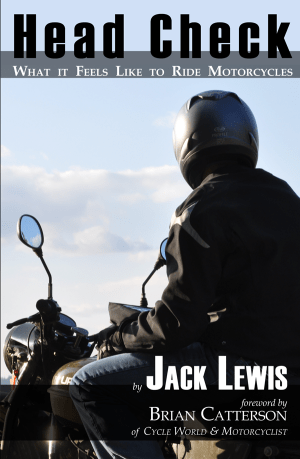 "Jack Lewis takes the overall literary crown with his new book...there’s a lot more to Lewis’s work than what it feels like to ride motorcycles.” — Ultimate Motorcycling
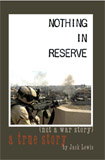 "Insightful and from the heart ... a driven and much recommended look into the mind and conflict of the next generation of war veterans. " — Midwest Book Review (Reviewer's Choice)
All true.
This is lovely and thought provoking, my brother.
All of our three kids’ lives, Julia asked them to write her her presents for all standard gift-giving occasions. She still has them.
As for extending grace to those who support hatred and division through bigotry, I try hard. But I’d rather stand with my friends who find themselves in marginalized groups under fire. I’d rather defend them than not, and this leaves me standing against those on the side of doing them harm. Therein lies the rub.
I don’t mind losing my relationships with the harmers, even when they’re blood, and the harmed are not.
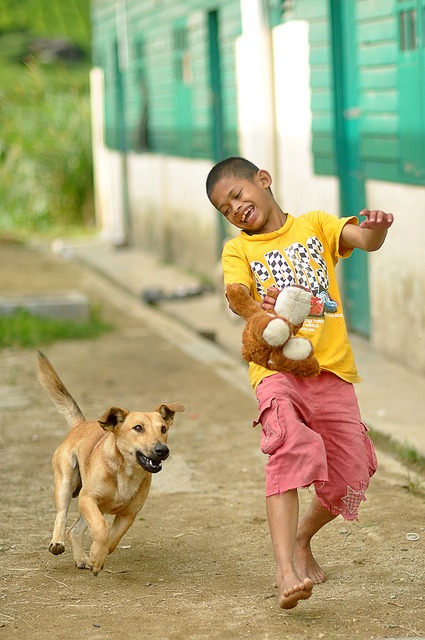
There are sheaves of wisdom in these words and endless inspiration from the sheer joy of friendship conveyed in the second photo. Also, interestingly, the colors in both photos are associated with the Asian deity Fudo-myo as well as the more familiar Rastafarians.
Perhaps it’s time to take a ride down that curvy road of rhythm and rhyme …